
Creating high-quality content takes significant time, effort, and creativity. From researching topics and writing blog posts to designing visuals and publishing across multiple platforms, content creation demands valuable resources. Yet many businesses make the mistake of using a piece of content only once before moving on to the next idea.
This is where content repurposing becomes a game-changing strategy.
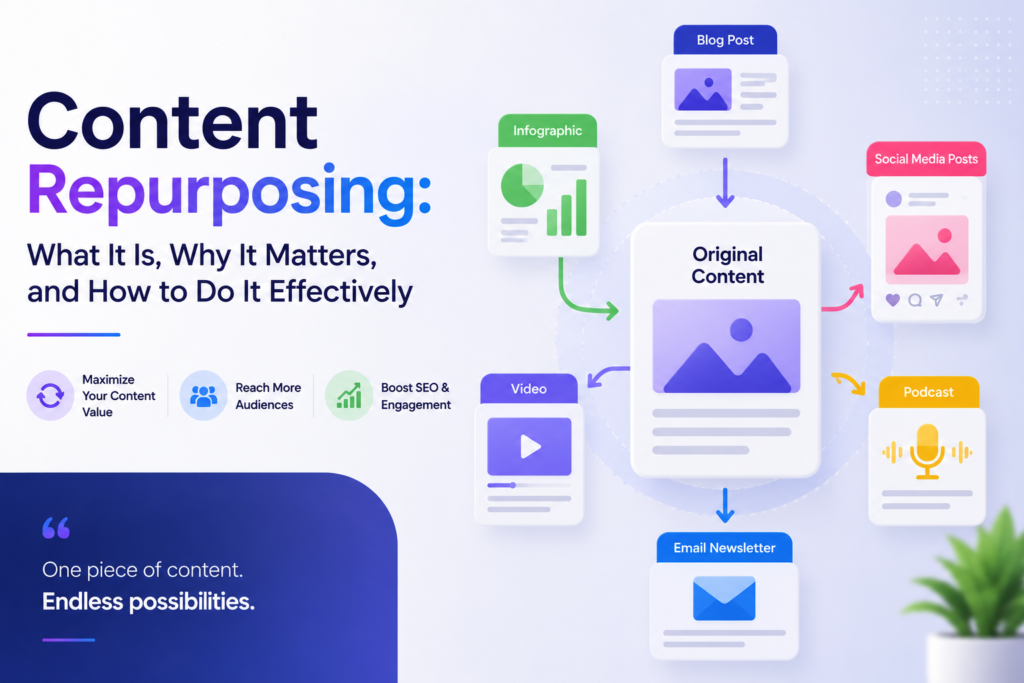
Rather than constantly creating new content from scratch, repurposing allows you to transform existing content into multiple formats for different audiences and platforms. A single blog article can become a video, infographic, podcast, email newsletter, social media carousel, or presentation—helping you maximize its value while reducing production time.
When implemented strategically, content repurposing strengthens your SEO performance, expands your audience reach, improves engagement, and delivers a higher return on your content marketing investment.
In this guide, you’ll learn what content repurposing is, why it matters, how to build a successful repurposing strategy, and the best practices to maximize every piece of content you create.
What Is Content Repurposing?
Content repurposing is the process of taking existing content and presenting it in a new format or adapting it for a different platform without changing its core message.
Instead of creating fresh content for every marketing channel, businesses can reuse valuable content in ways that suit different audience preferences.
For example:
- Convert a blog post into a YouTube video.
- Turn a webinar into a series of blog articles.
- Transform research findings into an infographic.
- Break a long-form article into multiple social media posts.
- Repurpose podcast episodes into email newsletters.
The objective is not to duplicate content but to extend its value by delivering it in formats that resonate with different audiences.
Why Content Repurposing Matters
Consumers engage with content differently. Some prefer reading blog articles, while others consume videos, podcasts, or social media content.
Publishing the same message across multiple formats helps businesses reach more people without continuously investing in brand-new content creation.
A well-planned content repurposing strategy offers several advantages:
- Maximizes the value of existing content
- Increases content visibility
- Improves search engine rankings
- Saves production time
- Strengthens brand authority
- Generates more leads from the same content asset
Instead of allowing valuable content to lose relevance after publication, repurposing keeps it active and productive for months—or even years.
Benefits of Content Repurposing
1. Reach a Larger Audience
Every digital platform attracts a different type of audience.
Some users enjoy reading detailed blog posts, while others prefer short-form videos, visual content, or podcasts. Repurposing allows your message to reach people regardless of how they consume information.
Sharing the same insights across multiple channels increases brand visibility and attracts new audiences.
2. Improve SEO Performance
Search engines reward websites that consistently publish valuable and relevant content.
Repurposing helps you target additional keywords by creating new content around the same topic in different formats.
For example, a single blog can generate:
- Supporting blog articles
- FAQ pages
- Video transcripts
- Infographics
- Social media posts
This creates multiple entry points for users to discover your website through organic search while strengthening topical authority.
3. Save Time and Resources
Developing original content requires research, writing, editing, designing, and promotion.
Repurposing significantly reduces production time because the core information already exists. Instead of starting from scratch, your team can focus on adapting proven content into new formats.
This improves productivity without compromising quality.
4. Increase Audience Engagement
Different audiences respond differently to various content formats.
Someone who ignores a long blog article may watch a short video or engage with an infographic on social media.
Offering content in multiple formats increases the likelihood of interaction and encourages users to spend more time with your brand.
5. Extend the Life of Your Content
Even evergreen content can lose visibility over time if it isn’t refreshed.
Repurposing gives older content a second life by updating statistics, adding new insights, improving visuals, and publishing it across new platforms.
Refreshing valuable content keeps it relevant while maintaining consistent traffic over time.
How to Build an Effective Content Repurposing Strategy
A successful content repurposing strategy requires planning rather than simply reposting existing content.
Identify High-Performing Content
Begin by reviewing your analytics to identify content that has already performed well.
Look for content that generates:
- High organic traffic
- Strong engagement
- Quality backlinks
- High conversion rates
- Consistent search visibility
Repurposing successful content increases the likelihood of achieving similar results across additional platforms.
Choose the Right Content Formats
Different topics work better in different formats.
Popular repurposing formats include:
- Blog articles
- Short-form videos
- Infographics
- Podcasts
- Email newsletters
- LinkedIn posts
- Instagram carousels
- YouTube Shorts
- Presentations
- Case studies
Select formats that align with your audience’s preferences and your marketing objectives.
Customize Content for Every Platform
Effective content repurposing isn’t about copying and pasting.
Each platform has unique user behavior, content length, and engagement patterns.
For example:
Share professional insights, industry trends, and business-focused takeaways.
Focus on visually appealing graphics, carousels, and concise messaging.
YouTube
Create educational or tutorial-style videos that provide in-depth value.
Email Marketing
Highlight the most valuable insights and encourage readers to visit your website for more information.
Adapting your content ensures better performance on every platform.
Refresh and Update Existing Content
Repurposing also provides an opportunity to improve content quality.
Update:
- Outdated statistics
- Industry trends
- Examples
- Screenshots
- Keywords
- Internal links
Keeping your content current improves both user experience and SEO performance.
Promote Across Multiple Channels
Publishing content is only part of the process.
To maximize visibility, distribute repurposed content through:
- Social media platforms
- Email campaigns
- Industry communities
- Guest blogs
- Video-sharing platforms
- Online newsletters
A strong distribution strategy helps your content reach new audiences while increasing overall engagement.
Best Practices for Repurposing Content
To maximize results, follow these proven best practices.
Focus on High-Value Content
Repurpose content that has already demonstrated strong performance instead of trying to recycle every piece you’ve published.
Avoid Duplicate Content
Repurposing is about transformation—not duplication.
Always add fresh insights, updated information, or a different perspective to ensure each version provides unique value.
Maintain Brand Consistency
Although the format changes, your messaging, visual identity, and tone of voice should remain consistent across every platform.
Consistency strengthens brand recognition and builds trust.
Track Performance
Monitor metrics such as:
- Organic traffic
- Engagement rate
- Click-through rate
- Conversions
- Time on page
Use these insights to identify which content formats produce the best results.
Make Repurposing an Ongoing Process
Content repurposing should become part of your long-term content marketing strategy rather than a one-time activity.
Regularly revisit older high-performing content and update it to maintain its effectiveness.
Real-Life Examples of Content Repurposing
Successful businesses often generate dozens of content assets from a single idea.
Examples include:
- Turning a detailed blog post into an educational YouTube video.
- Breaking a research report into multiple LinkedIn posts.
- Converting a webinar into a podcast series.
- Designing an infographic using statistics from a case study.
- Creating short video clips from a live presentation for Instagram Reels and YouTube Shorts.
These approaches maximize content reach while reducing production costs.
Our Approach: Making Every Piece of Content Deliver More Value
At Digi Mojo, we believe exceptional content should continue delivering results long after it’s published.
Our content marketing strategy focuses on identifying high-performing assets and transforming them into multiple engaging formats for different digital channels. Whether it’s blog articles, videos, infographics, email campaigns, or social media content, we ensure every asset aligns with your business goals and audience preferences.
By combining strategic planning, SEO best practices, and data-driven insights, we help businesses maximize content performance, improve organic visibility, and achieve measurable marketing outcomes.
Conclusion
Content repurposing is no longer an optional marketing tactic—it’s a smart strategy for maximizing the value of every piece of content you create.
By adapting existing content into different formats, businesses can increase their reach, strengthen SEO, improve audience engagement, and reduce the time and cost associated with content production.
Rather than constantly creating new content, focus on making your best-performing assets work harder across multiple platforms. With the right strategy, content repurposing becomes a powerful tool for building authority, generating consistent traffic, and achieving long-term marketing success.
Frequently Asked Questions (FAQs)
1. What is content repurposing?
Content repurposing is the process of transforming existing content into different formats—such as videos, infographics, podcasts, or social media posts—to reach new audiences and maximize its value.
2. Why is content repurposing important for SEO?
Repurposing helps target additional keywords, increases content visibility, strengthens topical authority, and creates more opportunities to rank in search engine results.
3. What types of content can be repurposed?
Blogs, videos, webinars, podcasts, research reports, case studies, presentations, email newsletters, and social media posts can all be repurposed into new formats.
4. How often should content be repurposed?
Review your content every 6–12 months. Update and repurpose evergreen, high-performing content whenever new information, trends, or audience needs emerge.
5. Does content repurposing improve marketing ROI?
Yes. Repurposing extends the lifespan of your content, reduces production costs, increases audience reach, improves engagement, and helps generate more value from existing marketing assets.